
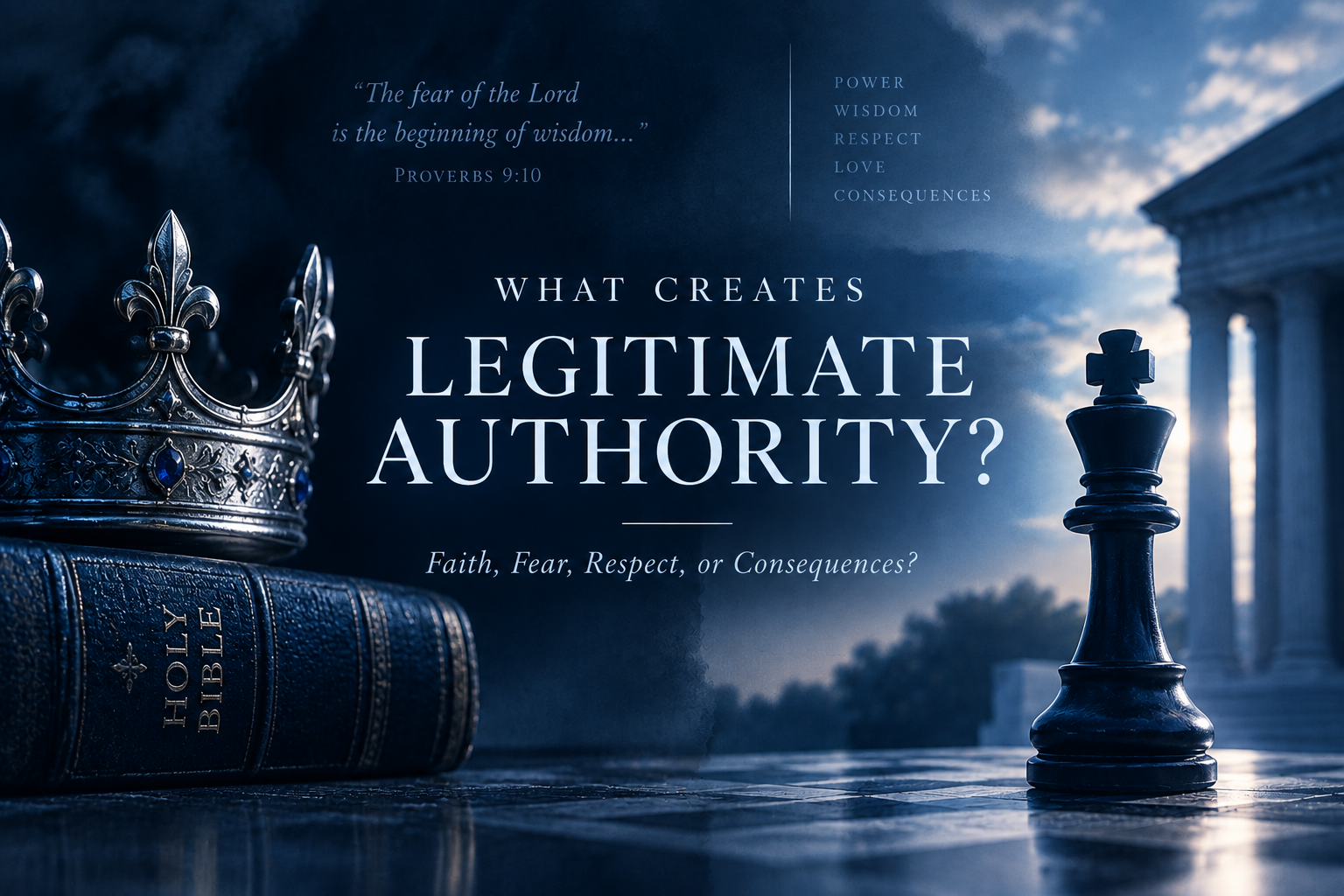
We often mistake fear for respect, believing that in order to be truly worshiped or held in high regard, one must strike fear into anyone who might oppose them. There is a common belief that to command respect, you must first be feared.
Being perceived as too soft or lenient can cause people to lose respect for you and, in some cases, take advantage of your kindness. I do believe there is a certain level of respect that comes from being feared. Fear creates a sense of authority and establishes the idea that there are consequences for crossing certain boundaries; with an enormous amount of leniency in a formal environment, it can make rules feel like suggestions rather than expectations. This raises an important question: is respect truly being earned, or is obedience simply being produced through fear, and through this fear-produced obedience, is this really the way to rule over a people?
Love isn’t a guarantee of respect, but fear can breed hatred to the extreme. Louis XIV famously built an extremely powerful monarchy and centralized authority around himself, coining the phrase “I am the state”; his dynasty was centered on him being the ultimate power.
By the time Louis XVI came into power, there were enough financial problems to last decades; there was social inequality and built-up resentment among the people, which contributed to the French Revolution in 1789, and in the end Louis XVI was executed in 1793.
From this, we can conclude that fear can make people obey, but if people become deeply resentful, fear can eventually turn into rebellion; it can turn into uprisings.
However, Niccolò Machiavelli argued that while it is ideal for a ruler to be both loved and feared, if one must be chosen, fear is often more reliable. Fear creates predictability because people understand that crossing boundaries brings consequences. However, being feared is different from being hated. Cruelty may create obedience, but it can also cause resentment that threatens a ruler’s authority.
On the other hand, philosophers such as John Locke placed greater importance on consent and the relationship between the people and their government. Authority cannot simply depend on the ruler’s ability to punish people; it must also have some form of legitimacy in the eyes of those being governed. This suggests that affection, respect, fear, and consequences each serve a different purpose. Affection can create loyalty, respect can create trust, fear can create caution, and consequences can create order.
The Bible also shows us the importance of balancing authority with wisdom through King Solomon and his son Rehoboam. Solomon was known for his wisdom and was respected because he understood that ruling required good judgment and the ability to have discretion towards his people.
In 2 Chronicles 10: 6- 8 (KJV Scripture), it speaks about how, when Rehoboam went into ruling after his father, he first sought out counsel from the old men for advice on how to rule as his father did. When Solomon ruled, he had 40 years of peace.
(verse 6: And king Rehoboam took counsel with the old men that had stood before Solomon his father while he yet lived, saying, What counsel give ye me to return answer to this people?) verse 7: And they spake unto him, saying, If thou be kind to this people, and please them, and speak good words to them, they will be thy servants forever.) The counsel men were telling him that he had to be kind and satisfy the needs of the people and in return they would satisfy his needs.
(Verse 8: But he forsook the counsel which the old men gave him, and took counsel with the young me that were brought up with him, that stood before him) He decided not to listen to the counsel and chose to seek counsel from his friends who gave him bad advice.
In the end Rehoboam chose to rule more harshly than his father, believing that severity would make him more powerful. Instead, his people rebelled, dividing the kingdom. Their contrast shows that an “iron fist” without wisdom can destroy authority rather than strengthen it. True leadership requires knowing when to be firm and when to show compassion.
So what we're seeing here is that fear may produce obedience, but respect produces lasting authority. Yet we know respect itself can weaken when authority becomes excessively lenient, because authority without consequences can become indistinguishable from permission.
The deeper question here is what actually creates legitimate authority: affection, fear, respect, or the ability to enforce consequences? The answer is all of these attributes are equally important; it's about finding balance. Fear doesn’t necessarily have to mean cruelty.
I think of this as ruling with an iron fist, but not a cruel one. An iron fist can represent firmness, boundaries, and the willingness to enforce consequences when necessary. True authority means knowing when to be firm and when to show compassion. The strongest ruler is not the one who creates the most fear, but the one who knows when fear, respect, affection, and consequences are needed. In that balance, authority becomes more than the power to rule—it becomes the ability to lead.
\ Get the latest news /

Beautiful!
Cool, good job .